Welcome to Tuscoro.com

Read More......


>

Monday, December 22, 2025

Piles of Gold Bricks and the Trappers (The Sugar Loaf Gold Story) Revisited

Originally Posted 2019

 Early Utah Trappers
And the Gold of the Red Ledges


The following is just one of the many research projects that I have accumulated as a result of 30 plus years of gathering information of unsolved mysteries pertaining the mysteries of this land, strange stories of discoveries, Mummy Caves, Caves with Unusual artifacts, implications of what can only be underground cities, Gold, Silver, and Platinum Caches left by men of the past, be it Romans, Spanish, the Confederate Underground, or some other. To this very day I am still looking for one individual or even a team to pursue that which is becoming more and more difficult for me. I have a few whom I trust explicitly, however they can hardly handle even one as a result of being roped to a job… For the most part, the majority of these projects have progressed as far as I can take them, barring new information, however the majority is at that point where in technology is seemingly the last and only resort, something I can no longer afford. The provenance of some is as good as you could hope for and some are very poor but with very compelling evidence. However the details is what will or will not convince you… Often times in these years of research I have often thought that certain projects can go no further, when out of the blue someone sends you new information. I have decided to share one of the many that some of you have heard before.
(The Sugar Loaf Gold Story)


The following story has been told prior in another publication found in my good friend, Dale Bascom’s Book, Following the Legends, of which I highly recommend. The descendant of the prime story teller in Bascom’s book is my good friend David Bullock. David is the Grandson of Ben Bullock, however the story I intend to tell deals only with the core of the story, rather than the perspectives told in Dale’s book.

The basis of the story you may see at the end of this article.

My past Article with early research, PRIOR TO, “New Information”


It was about mid 2007 when my phone rang with one of my colleagues calling, asking if I had read the story of the trappers, Yes, I replied but it had been sometime. He wanted me to reevaluate the story as if it were a new and fresh story without all the perspectives of those who told the story for publication.

The first thing for me to do was to determine the possibility of the story ever happening. I would have no doubt that someone showed up in the area of Springville at the time of Ben Bullock and Bishop Koyle’s mining days, but I would seriously doubt the man’s name was actually Johnnie Rasmussen. Although it is possible to have a name of Danish or Norwegian decent and having come from Mexico, in all likely hood he was using a fake name. Having come from old Mexico as the story goes, provides but a small clue…

Having studied the contents of the journals of Ogden, Kittson, Provost, Ashley and other fur trappers, it is highly likely the event occurred as it coincides with a couple of trapping parties at the very time mentioned in the story told by Ben Bullock, keep in mind the story told I am sure was quite accurate, but only as accurate as Ben remembered It being told to him. The point being, this story is told 3rd hand… With this said and as a result, I will say, normally, I wouldn’t have given this story any consideration other than a friend asked me to investigate it. Having made the determination that it could very well have occurred, what would have been the motive for any of those passing the story along to tell a tall tale such as this? Although there are many with some very wild imaginations, and I am sure could come up with some answer to this question, I just don’t see it.

There was an event told in one of the histories recorded in the journals that “could be” a reference to the very event described by the man who came up from Mexico to search for his G Grandfathers gold discovery. If it is the same even, it would appear some embellishing was involved in the official report given by Provost.

“Etienne Provost, a Frenchman operating out of Santa Fe under Mexican license, entered Utah in 1824 by way of the Green River country. He made his way tothe Wasatch Front and very possibly may have entered the Salt Lake Valley. 
If this is so, he would have seen the lake before Jim Bridger. Provost's party was attacked by a band of Snake Indians in the fall of 1824 and most of the men were killed. Provost and the other survivors escaped and made their way to the Green River in eastern Utah, where they spent the winter at the mouth of the White River. The actual location of this attack remains unknown but is thought by most historians to have been on the Provo, Jordan, or Weber rivers.”

It would seem another location is just as fitting for this attack but this will be withheld until I find someone who has what it takes to investigate. Later in the same document it is said:

The discovery of Warren A. Ferris's Map of the Northwest Fur Country (drawn
in 1836) has shed new light on the topic and adds considerable, although not
conclusive, support to the argument that the Indian attack occurred on the
Jordan River.


Contrary to this statement, I see absolutely nothing in the Ferris Map that validates this statement, Continuing on….

Ferris's narrative states that Provost was attacked on "a stream
flowing into the Big Lake that now bears his name." This would be the "Provo"
River. The Ferris map clearly indicates that the river known to the mountain
men as the "Proveau" is the modern-day Jordan River. The fact that the attack
occurred on the Jordan River, combined with Provost's apparent familiarity
with the route through Weber Canyon to the Great Salt Lake, points strongly to
the probability that he was at the Great Salt Lake in the fall of 1824, well
before Jim Bridger tasted its salty waters.

Again I see nothing that implies that the attack took place at the Jordan River, and it certainly is not a “Fact.”

Whether the attack incident is or is not the following account of an attack is neither here nor there as my only motive in evaluating the expeditions of fur trading did in “fact” occur in the time frame given in the following story.

Without inserting the contents of the story first made public, I will give the synopsis without all of the perspectives given of those who added to the story which in and of itself is at least 3rd hand information. It is the fact that if you listen to the details given whether true or not, and you are able to find the existing places, features etc which give the story credibility, then there is a probability that the story in general is plausible.

As the story goes….
About 1913, a stranger emerges in the town of Springville going by the name Johnny Rasmussen, he begins asking questions about details regarding an old leather map he had which is presumed to have been made by his Great Grandfather and containing the clues to follow. Johnny eventually meets John Koyle of the Dream Mine and eventually Ben Bullock of the Golden Relief mine. Both entertained Johnny sharing their beliefs as to why Johnny’s map fit their area and mine, Johnny struggled with their details but being a little more convinced of Ben Bullocks location.

What Johnny, John Koyle and Ben Bullock didn’t know is that Johnny’s grandfather’s treasure cave was nowhere near their locations. All they had to do was read… carefully and pay attention to the core details… As the story went, Johnny eventually just disappeared. As far as I know, no one is actively looking for this treasure cave and I have to wonder why, It is possible to find, whether it be boots on the ground or technology, but before that happens, the correct location must be found, and even more important, the searcher has to be satisfied that it is the correct location.

The root of the story and details given in the original publication are as follows…

“The description of the treasure location was:
1. Two and one half day's ride from the south end of the salt sea and follow a river which ran northward from a large fresh water lake located in a beautiful valley southerly from the salt sea.
2. One half day ride southerly from the east shore of the fresh water lake to sugar loaf peak.
3. Sugar loaf peak south easterly above springs that make a valley at foot of mountains and supply Indian camp with water.
4. Gold tunnel about three quarters mile southerly from sugar loaf peak and high on foothills.
5. Sugar loaf gold tunnel below rusty red ledges.
6. You look to the southwest along mountain and the valley closes.

“This was all brought about in about 1825 when Johnny's great grandfather was with a trapping party in the Rocky Mountain area. It was getting along to early fall. Fur bearing animals were becoming more scarce so the trapping party held a powwow in a meadow southerly from the south end of the salt sea. (We think the Grantsville area.) This search was for future trapping streams. It was decided to separate the party into groups of three and spend about ten days to two weeks fanning out in all directions to thoroughly explore the areas for next springs trapping. Rasmussen and two companions were sent in a southerly direction following a large stream. For two and one half days they explored branching streams but kept to the course of the starting point stream as a guide line. When they entered a mountain narrow southerly from their starting point they beheld a beautiful valley with a large fresh water lake south of them. In this valley a number of streams flowed from the mountains to the east which they explored but found no evidence of beaver dams. To the south the valley closed so they engaged in following streams as far south as the canyons fed. One little stream had a beaver dam in it so they followed its course southerly toward the mountain. A sugar loaf stood out at the base of the mountain for which they were heading. They made their way through cedar trees in the valley and saw the Wickiup of an Indian camp westerly from sugar loaf. Not knowing weather the Indians were friendly or not they skirted to the north of the camp and headed for the hills. The stream they had been following was fed by many springs between the Indian camp and the mountain.

When southerly from the camp and ascending the foothills they heard and saw a party of Indians coming from the south. They forced their horses higher up the hills and through the cedar trees. One of the Indians sent an arrow which lodged in the back of one of the trappers. He hung doggedly to his saddle until they saw a badger come out of a large hole on the side of the mountain. One rider jumped from his horse and found the hole large enough for them to crawl down into a larger opening. They abandoned their horses by swatting them on their rumps. The trappers hurried down into the badger hole, pulling the wounded man down into the hole with them. It was now evening time and getting very cool. A pile of sticks and brush had been dragged into the hole by animals and from these eventually a fire was started to warm the wounded man. One knotted cedar branch made a good torch and was taken from the fire to light the cavern to its depths. Not far along the way the trappers found piles of bricks which proved to be gold ingots.


He hurried back to his friends with the news of his find and the two men ran back to look at the gold. They were very excited with the great treasure. After some discussion it was decided that the gold bars were too heavy for one man to carry without horses and the gold could not be continually hidden. When found out they had had it. Their lives would be in danger until they told where their wealth came from.

They came to the decision that the best thing would be to keep in mind the guide posts that would lead to their find until paper and pen could be had to draw a map and write a thorough description which would lead them back to sugar loaf gold. This decided they hurried back to their wounded friend to tell of their good luck but found he had died from his wound. They pulled his body back to the piles of gold bricks and completely covered his body with bricks of gold to keep wild animals from ravaging him. From fear of being discovered by the Indians the trappers waited for days before they dared venture outdoors. The hour was late, they crawled out of their treasure tunnel, and walked the long distance back to home camp on the shores of the salten sea.

It is not known how long Johnie's great grandfather stayed with the trapping party  but he kept his golden tunnel treasure of sugar loaf secret, and firmly in his mind  until he had paper and pen to make a permanent record of it.”

If the information has been handed down correctly, the fact that he mentioned "Bricks" and "Gold Ingots" rather than "bars" or other tells me this is likely NOT a Spanish Cache, it is left by some former culture and by vague information, but by common sense and reasoning, has an estimated value of 500 Million plus.

You now have all the information I had to start with, can you find the right location? I may be right, and I might not be... but I can tell you the profound evidences without a stretch of the imagination are all there...

Thursday, December 18, 2025

Science is Stumped by Strange Mummies in Utah 1919 Article


The following is an old article of 7/27/1919, Page 47 of the Salt Lake Tribune,

I have never seen this article sent to me by none other than Darrel Sprecher who has sent me many over the years, Thank You Darrel once again.

This already interesting article has several things within that are telling, if you are well read and know your history from several aspects...You may see it... Acadamia will never see it as they do not concider all sources... lets see if there is anything within that raises your eyebrows... contrary to what the article says, I can tell you these people (Mummies) were not the first Americas... Using observation and DNA evidence, if “they” would use dna... will show that the first Americans are no longer here as a people, however their closest living relatives, (Decendants) are but not limited to.... Navajo, Hopi, Inuit, Aleut and others, and none of them crossed a land bridge. There are clues in the article unbeknown to acadamia and the author that will tell you who these people were. There is unintended false information as well...there is no mention of giants, large in stature etc... there are mistakes in the article such as missing words or even missing a sentence. And at the end it is clear the article continues onto a following page however the next page was a failed scanned, the only way to find the remainder of the article is to go to the Marriot Library where the original newspaper is likely held. ENJOY, if you have questions feel free to ask....


Retyped from the original by my sweet Hannah...

Science is Stumped By Strange Mummies In Utah

No Possible Explaination Yet to Account for the Red Headed, Wavey Haired, Perhaps White, Race in America, Thousands of Years Before the Indians or Even the Cliff Dwellers


The Type of Thouroughly Explored Utah Cliff Dwelling, Deep Beneath Which Were Found the Mummies and Remains of the Mysterious Lost Red-Headed American Race


By Dr. W. H. Ballou.


Those who have the habit of thinking that the original inhabitants of America were either straight and black-haired people like Indians, with coppery skins, or little brown-skinned dwellers in the Pueblos of the West like the Hupi Indians, will probably be just as surprised as sience now is to learn that 20,000 years ago, at leasat, there lived in Utah a red-haired, presumably fair-skined, race.

It may be that this vanished folk had their abode in other parts of what is now the United States. There are ledgends extant of a fair people dwelling in the New world long before Columbus discovered it, and these ledgends are found in the very oldest strata of Indian folk lore. In the light of recent discoveries sience is turning away from its scornful disregard of these stories which it has hitherto regardded as absurd.

The mummies which have revealed the existence of these red haired Americans were found in caves under the houses of the Clif Dwellers in Grand Gultch soth eastern Utah. There is clear evedence that they had entirely disappeared centruries before the Cliff Dwellers—themselves now a vanished race—took up their abode within the precipices of the canyons. A number of well preseved bodies, together with wepons, garments, basketware ans utinsels, are now under examination at the American Museum of Natural History, New York. The public will not be permited to see them for some time as they are being studied by Mr. B. T. B. Hyde, the museums expert, from whom no statement will be issued intill his reserches are complete. Other museums at Harvard, Pennsylvania, Chicago, Yale end Denver universities also have their quota of the mummies. But these institutions will await the verdict of Mr. Hyde before giving out any resalts of their own examination.

The bodies, although so ancient, have been excellently preserved by the extraordinarily dry air of the place in which they lived and were buried. Their hair ranges from what is called Titian to a violent red; the hair of the babies and Youngsters is distinctly wavy.

At least one important fact can be deduced from this-the red-hatred Americans, whoever they were, did not come from Asia, as there is good reason for believing the American Indian did. Anthropologists have all agreed on just three types of hair for mankind, existing and extinct. These types are straight black hair, kinky hair and wavy blonde hair. All shades of red are included in the word blond. We do not know yet whether these three types originated simultaneously in diferent sections of the world, or wether one tyoe followed another, nor do we know which is the oldest or the original type, if single origan of mankind, a matter in hypothetical dispute, be decided upon, but we do know that the Asiatic, in its pure stock, invariably possesses the straight hair.

How did these people live and what caused their extinction? The first question we can answer –atleast in part-- from the necessarily superficial examination made of their homes the artifacts and weapons found in their strange Graves. The second question is unanswerable— as yet. They may have been wiped out by an epidemic of disease and examination of their withered skin and muscle and bones may reveal what this was. or they may have died out through some weakening of the racial strain. Whatever the cause, it was not warfare. There must have been a period when the dwindling remenants of the tribe lived in a great loneliness. In one of the caves, the searchers found what may be called a page from the end of their volume. And it can be read in part.

We know that the burial ceremonies of this people must have been extremely elaborate. They took their dead and placed them in “pot holes,” [SEE Image Below] which they dug in the floor of their caverns, these pot holes, they lined with a baked clay, and in them they put, doubled up and squatting, the body of the dead. Then they covered the cadaver with beautiful feathers and sometimes rabbit-skin robes, placing beside the man or woman or child arms, ornaments, dishes, and toys. After that, the body was covered with closely woven baskets, the taps of which were covered with sand and earth.


Owing to the peculiar dryness of the caverns, the bodies, instead of decaying, slowly dried

The flesh,” write Dr. George H Pepper of the American Museum, “wasted away until the skin flattened on the skeleton, leaving their hair and eyebrows intact, with ears, nose and skin on the face and other fleshy parts of the body in so perfect a condition as to be sometimes almost lifelike”

In one case searchers found the withered body of an old woman crouching against the side of the rocky wall. [SEE Image Below] Her hair still retained some of its auburn coloring. The mummy squatted there, and even the centuries had not wiped out from her face and her attitude the seal of resignation and sorrow. They found in this cave seven pot holes in each of which was a body— One of them of a little child. The withered old figure, still sitting so patiently, and bend the last of this family, perhaps the grandmother. One by one she had seen her mate, her children and her grandchildren die, and she had helped to place them away according to the customs and rituals of her people. And at last she was left alone. There she sat and waited for death to come to her— among her own dead. There was no one to bring her food or water, and when at last she died, there was no one to give her the burial which had been afforded her own beloved dead.


Was she the last woman of the red–haired Americans? it is not possible, for had there been others living about her and any of the other caverns, they surely would have prepared her body, even as she had prepared so often others who had passed into the unknown. and if this were so, what must her loneliness have been? In all the world outside, she must have thought that no other being like herself existed. Outside the cave for nothing but prowling beasts and perils. Someone had written that the most awful fear one could feel would be to know one’s self the last living person in the world and then to hear at one’s door someone knocking.

Anticipation of such terror, this old woman of the red haired Americans conceivably experienced, squatting there in the dark cavern alone.

The mummies of Grand Gulch formed the greatest riddle with which anthropologist have had to deal. No other known race has presented such perplexities. They were found while the workers were excavating the cliff dwellings which originally towered along almost the whole stretch of the canyon for fifty miles. Invariably, when they dug down to the sellers of the Cliff Dwellers, then dug through the floors, they would find that there were still beneath, filled-up caves in which a mummy or several mummies were buried in the artificial pot holes, covered with the most primitive basketry known. no pottery whatever was found with the remains. The only weapon found with them was an occasional atlatl, or stick-thrower or spear-thrower, As they have been successively, termed, of the most primitive form of the four types of this weapon. It was noticed by experiment that the stick-thrower could be sent with power just enough to kill a rabbit only.

It was further noted that the skulls in the caves were long heads, while The skulls of the Cliff Dwellers above were flattened behind. These and other puzzles have caused anthropologists to defer decisive investigation in hopes of getting more evidence on which to base conclusive facts. By common consent of the institutions involved, the problem has been left to Mr. Hyde to solve from the scanty material unearthed from time to time. It is doubtful if he will be able to point to a finality without organizing another expedition, with ample means to clean up the whole gulch along its bottom. Such an expedition is certain to be formed and financed directly by the American Museum.

The late Otis T. Mason. of the Smithsonian Institution, took up one phase of the problem, which is regarded as conclusive. He was our great authority on basketry, and at first, the Grand Gulch troglodytes were named “Basket Makers,” but have since been taken out of that class because basket making has never been universal from the beginning. He noted that their basketry was of positively the most primitive coiled type, as distinguished from the more modern woven type. In this, he was supported by Dr. George H. Pepper. He wrote as follows in his great work on basketry published by the Smithsonian institution. “Their baskets were of the coiled type made of willow, the bottoms reinforced with heavy yucca cord border, finished with the ordinary, coiled stitch, but in some the last inch or two was finished off with false braid or herringbone. The type in general is still in used by the Piutes (Paiutes) and Shoshone’s and is seen in ordinary Japanese cinch baskets and baskets of Samoa and straights of Magellan.

The coiled type was that Of the most ancient tribes of Egypt, made of palm leaf, excavated by MacIver and Wilkins at El Armah, 6 miles south of the site of Abydoa middle Egypt. It is the oldest type in the world. El Armah dates back to the earliest “new race,” through the entire middle period down to the late prehistoric of Egypt. It was the single type through 6,000 years, extending far up the Nile to Aden and into Hindustan. Long caravans took it into the heart of Africa, where it still persists.”

The presence of the wooden stick, or sperar, and its slight killing power shows completely isolated. No other human beings or tribes could have been near. Had they been they would have been forced to develop a primitive armament.

Dr. George H. Pepper, quoting Richard Wetherill, describes their home as follows: “Grand Gulch drains nearly all the territory southwest of the Elk Mountains, from the McComb Wash to the Clay Hills, about 1,00 square miles or territory. It is the most tortuous canyon in the whole southwest, making bends from 200 to 600 yards apart almost the entire length, or for fifty miles, and each bend means a cave or overhanging cliff. All of those cliffs which have an exposure to the sun have been occupied either for cliff houses or burial places. The canyon is from 300 to 700 feet deep, and in many places tword the lower end the bends are cut through by nature, making natural bridges. Under these bridges in some cases, are houses, and in such places are pictographs in the greatest profusion.

Ingress and egress is very difficult, there being not more than five or six places where even footman can get into or out of the canyon. Water is fairly plentiful. Springs occur at very frequent intervals, running a short distance and sinking in the sand, perhaps to rise again lower down. Wherever there are slopes a small growth of pinon and cedar occurs; about the springs are cottonwoods, mountain ash and hackberry; in shaded side canyons are mountain ash and hackberry. The usual bush of the canyon is scrub oak. Canes or rushes cover the bottom lands in the vicinity of water.

This then was the home of the Basket Maker, so afr as we know. The Cliff Dwellers practiced artificial flattening of the head confined to the back portion of the skull, as pronounced in women as men. The skull of the Cliff Dweller was broad, short and flattened; of the Basket Maker narrow, elongate and normal. The Cliff Dweller used the bow and arrow; the burial caves is twenty-two feet in Basket Maker a throwing stick, the nearest or which was found in Chihuahua, Mexdico, in form of the atlantl. There were other implaments peculiar to the Basket Maker. One of which is similar to the rabit stick used by then Hopi Indians to-day.

The most striking feature was the absence of houses in caves and the mummification of dead in pot holes under baskets. The pot holes, lined with baked clay, were diameter, where skulls and mummies are found, long since filled with sand and debris.”

The Basket Maker rsank below mummies from Pelechuco, Bolivia, excavated by the late Dr. Adolph F. Bandelier for the American Museun. These Bolivians made pottery, a step in advance of the Basket Makers. The next higher type of mummies were found by Dr. Charels W. Cordillera, also for the American Museum, also used for storing grain. The largest of ???? Continued? 

I hope to find the following page to get the rest of the story.... wish me luck... After posting this article I found that a few others have also found this article and created some short snippets... Here you can at least read the entire article as it appeared in 1919.

Saturday, December 13, 2025

Enormous Cave of the Aztecs Fact or Fiction REVISITED

 Originally Posted December of 2022

Rumors and the writings of those who sell books have conjured stories for treasure books for a long time, one such version of a story which is to follow, seems to have an agenda of convincing the reader of a fallacy story of Moctezuma instructing his people to haul hordes of silver and gold back to their ancient homeland… and it just didn’t happen. However the truth of what happened to me is even more exciting and compelling than the embellishments… Was there a caravan in the time of Moctezuma II which brought hoards of silver and gold back to the home of their ancestors? No... Was there in the time of Moctezuma I in which a great wealth was brought to their ancient homeland intended as a gift to those whom they left behind? Yes. However in all probability it never made it to its intended destination. As it would seem according to the Aztec record many priests were entrusted with the shipment, when they returned with their made up story claiming to have delivered it, 9 of the priests did not return, when Moctezuma I asked what happened to them they claimed that the God required their soul in exchange for turning them into animals in order to transport them more quickly to their ancient home. Moctezuma I did not question it. What happened to them 9 priest and why wasn’t any of the others talking? I think you can figure it out. 

Another incident took place at the time the Spaniards invaded Mexico, when the Aztec saw the Spanish priests burning their history and records of their linage, something that was most important to them, they gathered their remaining records and sent them north to their ancient depositories. There was one other item that may have been returned to their ancient home, it may have occurred in its own separate time, or possibly accompanied the previous mentioned incidents, this item was more important to them than any other substance they had, and is of ancient origin, the War Box, or their God, Huitzilopochitli. What was so important about this God of theirs that four men  with two poles carried it before themselves when ever they went to war and each time found themselves victorious.

 SEE Seeking the Ark of the Covenant Part Three

The War Box


Rabbit Tail

The following sent to me by a friend is a copy of the actual text article about the adventures of Jake Johnsons which was publish in 1903, years before the embellished (Abridged) version written for a treasure magazine was published.


Jake Johnson with a well-earned reputation as an experienced prospector, but not so much of a miner as he preferred to roam the hills rather than work underground, in a way he was a pocket hunter and with his two burros with pick shovel gold pan and a few primitive mining tools a sack of flour and a couple of slabs of side bacon would start for the hills and would be gone for months to return eventually with a buckskin sack well filled with placer gold or with a few fine gold nuggets wherewith to purchase a new grubstake for a new start which generally occurred as soon as he had been on a spree for a few days which left him penniless before he took to the mountains again.

On one of these trips, while in the Grand Canyon of the Colorado, near the Utah-Arizona line, he had the misfortune to fall from a precipitous cliff into a box canyon, which in this region are numerous. The fall resulted in a broken leg, and for a day after the accident he was unable to stir. The next morning, with slow movement and painful exertion, he was able to crawl a hundred yards to the bank of a little stream which wound its way to its confluence with the main river. Here he was able to quench his feverish thirst, but, being without provision of any kind, he was almost on the verge of starvation when he was found by an old Indian, who, with his squaw, was wandering around in this mighty wilderness, subsisting on rabbits and other game, and upon fish from the river. His wickiup was near at hand, and with great difficulty Jake was helped by the Indian to his humble abode. Here he was carefully nursed by the Indian and his squaw, and, within a month was able to hobble around on improvised crutches, and was soon able to resume his prospecting; his burros, in the meanwhile having been found by the kindly Indian and brought, with considerable difficulty, to the little stretch of grass-grown land bordering on the stream, and the sky-towering cliff near which Rabbit Tail, for this was the Indians name, had his temporary lodge.


Rabbit Tail in his younger years

During his convalescence Jake won his way to the heart of Rabbit Tail and his squaw, and many were the weird tales told by the old redman of exciting adventure, of privations endured, of hunts, battles, victories and defeats, and once, when in a more communicative mood, he told of finding nuggets of gold, and hinted of the existence of an old mine, on the dump of which great trees grew, and in the ancient and abandoned workings of which there were still left standing great bodies of ore in which native gold sparkled in the glare of a pitch-pine torch. 

Jake, upon hearing this, was all excitement, and begged the Indian for more information concerning this old treasure vault, but without avail, as the wily savage became as mum as an oyster upon seeing the interest the white man had taken in his narrative.

It happened shortly after this, that Jake was able to rescue Rabbit Tails squaw from the attack of a mountain lion, which so softened the Indian that he told him that if he would meet him at that place within a year that he would show him the old mine, but that he could take no more of the gold than he could carry away with him and that he would be led blindfolded to and from the old bonanza, which, he said, was located in an almost inaccessible spot ,near the brink of a yawning precipice, and above which were towering cliffs which rose perpendicular until their summits were lost in the blue of the sky.

Jake then started on his way to civilization, but, before leaving the canyon, had the good fortune to find a rich placer deposit in one of its tributaries, from which he took about $1500 in the yellow metal. Marking well the spot, he pulled out for Dandy Crossing, and finally reached Marysvale, from which point, after putting his burros into pasture, he came to Salt Lake City on the train. Soon after he left for his old Missouri home, where he soon had his cousin, Mike Smith, in a fever heat over his placer find and the story told by the Indian of the existence of the old gold mine. After a week or so of rest, Jake could stand the monotony of civilization no longer, and started for the west again, but not before he had drawn a crude map of the Grand Canyon of the Colorado, and indicated the spot where Mike was to meet him within the next six months, when they would both work the placer, and meet with the old Indian, provided the redskin was true to his Word. 

This was what brought Mike Smith to Salt Lake City within the next three months, and this was why he informed all who questioned him that he was a prospector. Having been enjoined to silence and secrecy by Johnson, he avoided all intercourse, as much as possible, with everyone, and one day, with a modest outfit, he left for Marysvale, where he purchased two burros and started on his lonely and solitary trip for the Colorado River. It was then that his real troubles began. Unacquainted with the ways west and totally without experience, he was often without water, and many times he lost his way. At last, however, ragged and worn, haggard and thin, he reached the Colorado, and after many days, reached the little camp prepared by Johnson, where he was heartily welcomed by this grim old prospector, who enjoyed life in the wilds, alone with nature, more than he did in the busy haunts of men. 

For the first few days after the arrival of Mike, the two worked the placer, and with most satisfactory results. In the evenings, before rolling up in their blankets for the night, they would smoke their pipes and wonder if Rabbit Tail would keep his tryst and show them the gold-laden caverns which had evidently been discovered and worked soon after the subjugation of the Montezumas. While thus engaged, one evening, the Indian stood before them, coming as silently as the rising of the morning sun. He was welcomed, but was surprised that Johnson had brought a companion with him, and seemed disinclined to fulfill his engagements. After much discussion, however, and taking a liking to Mike, he expressed his willingness to make him one of the party, and warned the two white-men to be ready to start at early dawn. 

Almost before it was light enough to see their way, the three were up and afoot. The way was difficult. Sometimes thick brush hindered their progress. Occasionally a blank wall confronted them, and it was necessary to climb upon each other’s shoulders to overcome these obstacles; and creeping, climbing, clinging, to roots and bushes growing in the crevices of the rocks, they at last reached a point where they were blindfolded by the Indian. From here they traveled in single file, clinging to a rope held by their guide. For an hour or more they followed, skinning their shins against rocks and boulders, and sometimes falling to their knees because of inequalities in the ground. After what seemed an age, and when tired and exhausted almost beyond belief, the bandages were removed and they stood in almost midnight darkness. At a word from Rabbit Tail a light was struck and a torch lighted. Upon looking around, the two prospectors and fortune-seekers found that they were in an enormous cavern, the sides of which gave no trace of mineral. At their feet, however, were masses of rock, which, upon examination, were found to be rich in native gold, but their source was not apparent. Elated, and yet disappointed, Mike and Jake turned to the Indian, who motioned them to a small drift in the cavern that they had not noticed before.

Following the redskin, they got down on their hands and knees and crawled for a hundred feet or more through a small passage, coming at last to a narrow shelf of shale which bordered a chasm about five feet in width. This must have been very deep, for when rocks were dropped down it the sound coming from the bottom seemed but an echo. The Indian lightly leaped the gulf and Mike and Jake followed, but not without apprehension, and found themselves, breathing hard and trembling, on the other side, with but a narrow shelf for a foothold. Almost creeping along a torturous path, hardly able to keep their balance at times, they at length arrived at the entrance to a wide passage, which seemed to cut the chasm at almost right angles. Penetrating this for several yards and then climbing up an incline upraise for twenty or thirty feet, they were ushered into a great chamber. The sight that met their gaze in this chamber rendered the two prospectors speechless. Under the glare of the torches bottom, sides and top were resplendent with bright, glittering gold. 


In front was a great body of honey-combed quartz, in which were nuggets of the pure metal as large as walnuts. These were bound to the quartz by wire gold. The roof of the stope presented a perfect fretwork of wire and native gold, which seemed to be woven into festoons. On the sides the gold occurred in hard, white quartz such as beautiful jewelry is made from. On the floor great chunks of the gold-bearing ore were laying around and, among them were to be seen mining tools of ancient make, while, in one corner, could dimly be discerned the skeleton of a man, evidently that of a white miner. 

Recovering from their astonishment, Smith and Johnson fell into each other’s arms, but the Indian stood silent and solid. A few minutes later he said, Come, we go out. Then it was that the white men came to their senses. They plead with Rabbit Tail for an hour, for half an hour in which to explore, to investigate this place of more than Monte Cristo wealth. But Rabbit Tail was obdurate and would not yield, and obeying his commands, they filled their pockets with the biggest nuggets, the finest specimens of wire gold, and the richest pieces of gold-filled quartz that they could find. Retracing their steps, but with greater difficulty than when they entered the treasure vault of the ancients, for they were heavily loaded with gold, they at last reached the cavern where their eyes had first been uncovered. Here the bandages were replaced by the Indian, and, led by him as before, they set out on their journey to their camp, which they reached just as the sun was setting in the west. 

Tired and worn, they devoured the food that had been left from their morning repast, and were soon in deep slumber. It was long after daylight before they awoke, and when their eyes were fairly opened they discovered that during the night their Indian friend had left as quietly and as suddenly as he had arrived. For two or three days Jake and Mike rested, gloating over their store of gold. Then they spent several days in an effort to rediscover the wonderful mine. Time after time they climbed to the spot where Rabbit Tail had put on the blindfolds, but from there on all was a blank, and no trace was left of their previous passage. At last they left for Utah’s metropolis, packing their gold on their burros. Arriving at Salt Lake, they sold their wealth of gold, and for several days the papers were full of accounts of the small lot of fabulously rich rock that had been put through the sampling works, but no one ever found from whence it came, although Smith and Johnson were shadowed day and night until they left for their Missouri home. 

Ever since then, year after year, two prospectors, with four burros, have been seen haunting the beautiful yet desolate regions of the Grand Canyon. Smith comes to the city once in a while, and to all inquiries he says, I am only a prospector. And yet he does not know the difference between lime and quartzite, slate and shale, nor is he posted on country rock; but, if he would tell the truth, he does know something about honey-combed and white quartz. Best of all, down on Shell Creek, in old Missouri, he has one of the finest arms in Caldwell County, which he purchased with a portion of the wealth gained by him in the old mine in the Grand Canyon of the Colorado which was found and lost under the guidance of Rabbit Tail the redskin.

(The Salt Lake Mining Review in 1903)


There is an abridged version on the internet but would be better described as the “Embellished Version” or exaggerated, it also has an inserted paragraph designed to sell stories… SEE Following paragraph inserted into the original story...


According to Indian tradition, an expedition of well-organized and warlike men had come from the south escorting a long line of slaves, dragging boxlike containers shrouded by skins. The party went directly to the Grand Canyon and descended down from the south rim. The treasure was placed in a cavern that evidently had been chosen earlier. The slaves were killed on the spot, while half of the men remained as a guard and the others returned to the south. It was probably planned by the Aztecs that they would recover the cargo once the Spaniards had been driven into the sea, however, months and years went by without word for the garrison at the cavern. Eventually, they intermarried with the local Paiutes and told them tales about a great Indian empire in the south with their emperor, who would return in the future with an army to bring prosperity to the Paiute tribe. Until then, the treasure must be guarded from discovery by anyone. It was a responsibility that meant annihilation for the Paiutes should they permit the hidden cache to be stolen.

To Date, I have not been able to verify the validity of the above paragraph added to the treasure book tales, it is likely an embellishment to attract sales. The following description is included in the embellished version as well.

The glare from the four torches suddenly magnified several times the magnitude of golden idols, shields, and other objects reflecting the light in the eerie flickering flashes. Neither of the men had time to inspect the cave at length, as the Paiutes continually urged them to take what they could carry and retrace their steps to the surface. It was clear that they were at the base of the Grand Canyon, since an opening could be seen in the distance that led onto a sand beach. However, the men were never sure whether they had come down through the cave from the rim of the canyon or whether they had been led at some point along the sheer walls when they had entered the cave. 

The part about an opening could be seen in the distance that led onto a sand beach was no doubt added to tie the story to the embellish James White story. The original publication of the James White story, made no mention of a cave with untold riches. Do your research people, it isn’t worth it chasing after fallacy. 


Sylvestor Prado

However… the following story which has never been published but in which I have written about in parts from time to time… has been verified in many ways and will be given again in a small part, but I assure you it is original information as received and experienced several years ago. 

The original document  and story written on an old cloth came from a Mexican man by the name of Reuben Morales who came from a small town named El Dorado on the inland side of the Gulf of California. It is believed he may still be alive and living in Texas and I am still trying to locate him however it is like trying to find a John Smith in the whole of America


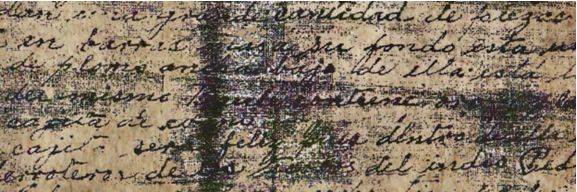
The old cloth document

Sometime in the 1970’s if I recall, Reuben came north in search of his ancestors mine, cave and cache with the old document and verbal information handed down to him from his presumed possible grandfather Jose Pedro Salazar. Sylvestre Prado who was the author of the hand written document and which is the topic here in, may also be an ancestor to Rueben. It is believed Prado’s initials have been found in the suspect area.


It is believed that Jose Pedro Salazar was occupying the area in question in the early 1800’s to mid 1800’s, he was according to the document  “an Indian” and it is believed he catered to the Spanish while they mined in the area or he spied upon them when they were there. Reuben spent near 10 years searching for his ancestor’s cache. 

Not many years ago we had an encounter with one of the earliest original well-known name land owner in the area, and after he decided we were not worthy of being shot we talked for some time and the situation became friendly, we asked him how his family came by the property, and he told us that when they first entered the land (around 1850’s) with intent to homestead they encountered an old Mexican Indian who was the owner or possessor of the land, we can only surmise this was by a Spanish land grant, or that by right of being there for so long he simply considered it as his territory. He told us that they became friends and eventually he carved out a substantial piece of land and gave it to them. Was this Perdo Salazar? 

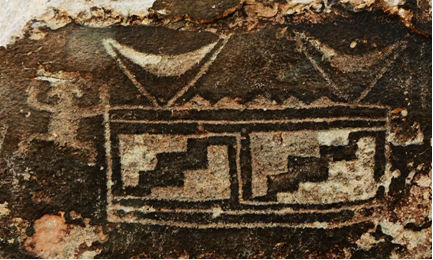
After Reuben had exhausted his efforts to find what his ancestor left behind, he contacted a known treasure hunter in the area and asked if he could help him, upon an agreement he shared a copy of the document and showed him a map and shared the verbal information needed to find the right location. This treasure hunter eventually in years to come became a friend of mine, and after sitting on his files for quite a number of years and having only made a few trips in an effort to find any evidence of truth, he decided to pass the information to me. At the time I was spending a lot of time in the general area documenting what I now call, the Aztec Navigation Glyphs, which by the way, have nothing to do with finding water as supposed by others.


One of near 200 known glyphs

You can read more about these at Aztec Navigation Glyphs


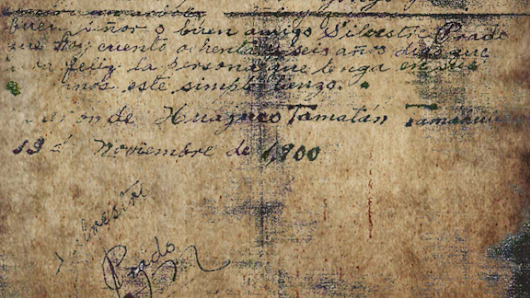
The old cloth document was in pretty bad shape when it was copied but the writing was discernable but very difficult to read due to its condition and old Spanish words not common today, great effort was taken to first transcribe the document of which I owe a great deal to my friend Adam, after which much effort was put into getting a correct translation which can be very difficult due to the old Spanish and there is still a few words we just cannot make out, someone experienced in not only Spanish but old Spanish may be able to recognize the words


A small piece of the old cloth document


The following is some of the excerpts of the more interesting things found within the document and will clearly show why I have spent near 18 [21 now] years working on this project. Our first trip down to the area resulted in discovery of several things mentioned in the document and today, we feel we have found the location of the Indian Salazar’s cave, or mine, the entrance of which has been filled, yet the slide rock from it abounds in ½ inch chisel marks. 

….Enter said (Salazar’s smaller) cave and on the east side (floor) in the lower part of  which is two large flat stones marked (with a 1 and 2) and below them you will find some oak planks cultivated to the rafter with pins of the same wood and some cowhides.  These pieces are covering a chest which stores a large quantity of pieces of bars of silver.  Further to the bottom is a cross with wide edges.  Under it is the cover of the same material that contains gold & silver and a small black ebony box.

The one who finds said small box will be happy, because inside of it, are the directions/map to the treasures of the Indian Pedro Jose Salazar who for a long time was the owner of these mountains.

These papers are written in a language that I do not recognize.  They are written with mules blood.  Whomever it is that comes to have this cloth in his hands will come to find out that if he breaks said box that it contains jewels of gold and silver and paper made from a berry tree where it is explained where the place is found where the great treasure of said tribe exists an enormous cave that holds the highest amounts ever known to man…


Another piece of the old cloth document


The previous is directly from the source. I have been involved in this project has gone on for near 18 [now 21] years. It would appear that Salazar and possibly Prado, knew the location of the enormous cave that the old Piute Indian, Rabbit Tale, the Redskin knew of. 

RECENT UPDATES:

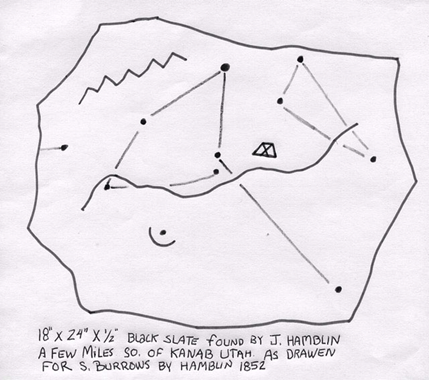
Many years ago, I and my wife took a trip to Southern Utah and Arizona with our friends Bonnie and Steve. I recall Steve telling me as we drove between Kanab and Fredonia, We had been talking about the map rock that was found by Jacob Hamblin in 1852, Steve pointed at one of the hills off the side of the road and said, a Navajo told me that on top of one of these hills is a flat stone and when you turn it over it has a map carved on it. This is very near where Jacob Hamblin in 1852 found a black slate stone with a map carved on it.


Sketch of the Jacob Hamblin Black Slate Map


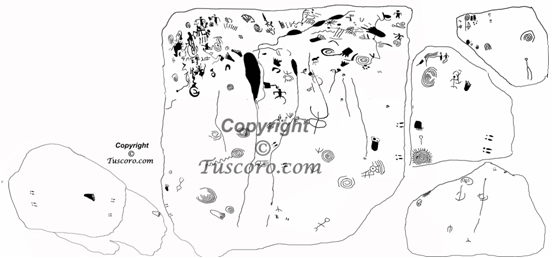
But what does this have to do with the story at hand? I suspect the same Navajo which Steve had talked to was the same in which I met just a few years later and he told me that there was a map with many petroglyphs not far from Kanab, he told me he would take me there.  I doubt this map has anything to do with the Salazar document but maybe it hold clues, My friends Glen and JoDee spent about 4 hours with me documenting the site meticulously, the objective was to recreate the image in black and white. 11 years later I finally finished the project, some of you may see implications.


The area of the subject of this article is in the lower left of the largest rock, if you see it you will also see the 3 lakes site north of Kanab and even Johnson’s canyon not to mention the location of the famed underground BUDDHIST/HINDU city of the Grand Canyon [NOT EGYPTIAN] Why does this matter? 

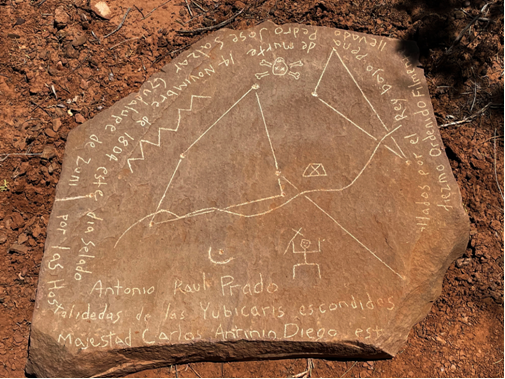
Now for the shocker…. In September of 2022 friend of mine called me one day to get instruction on how to find a certain petroglyph panel, having given him instruction and sending him on his way, I went about my day… later he called me and was pretty excited and said you are not going to believe what I just found… well he sent me a picture of which first glance nearly removed me from my sitting position to the floor. He said while hiking the pertinent location, he noticed a large flat rock very much out of place, because it was not native to any rock formations in the area…

With permission to share the photo this is what he had found face down in sand and gravel.


Confused and excited at the same time, I thought, “What the hell? This is the same map as was found on the Jacob Hamblin slate stone found 170 years prior and in the same general area. My friend was in doubt because of the condition of the writing, I reminded him that it has been face down in sand and gravel for near 220 years, I had no problem with its condition. I do wish however we could find the corner piece broken off.

Reading the text provided another near encounter with the floor… Although I have not had it translated by someone other than me, not only does it provide us a clue in the subject story as to what it is and why it exists, It was written by Antonio Raul PRADO! And it is concerning Pedro Jose Salzar! How could this be I thought? The date on the stone is from 1804, 96 years prior to the cloth document and it was found about 50 miles away from the subject site! Why was it here? 

The stone map reads loosely as :

(His) Majesty Carlos Antonio Diego this ____missing____ Order Filming (?) Pedro Jose Salzar Guadalupe (of the) Zuni by the even leaders of the Yubicaris (tribe) hidden ___missing___ -llados (decreed?) by the king under death penalty November 14, 1804 sealed this day by Antonio Raul Prado


The original text on the stone map…. 

Majestad Carlos Antonio Diego este  <missing word[s]>  diezmo ordenido filmente llevado pedro jose Salazar Gudalupe de zuni por la hasta lidedas de las Yubicaris escondidos   <missing word[s]>    [dego?]-llados por el rey bajo pena de muerte 14 Novimbre 1804 este dia selado Antonio Raul Prado


I would really like someone who is very good with Spanish to look at the original text… perhaps through common sense and reasoning we can discover the words missing from the stone…

I am also looking fior someone who can explain to me how sur names in Mexico are established from ancestors because it makes no sense to me.

Perhaps a little bit of light was shed in doing a bit a research on the name Carlos Antonio Diego or better known as King Charles IV found on the map rock... 

It would seem not only was King Charles trying to undermine the power of the Church and the aristocracy, he was attempting to steal the land away from all the nobles who invested in the new world. 

From WIKI the Great

“As the situation with immediate revenue became more fraught, the crown in 1804 imposed measures in its overseas empire forcing the church to call in immediately the mortgages it had extended on a long-term by the Catholic Church. Although aimed at undermining the wealth and power of the church, for the wealthy landowning elites, they were faced with financial ruin, since they had no way to make full payment on their mortgaged properties. This ill-considered royal decree has been seen as a major factor in the independence movement in New Spain (Mexico). The decree was in abeyance once Charles and Ferdinand abdicated, but it undermined elite support while in force.”


This map rock was found along the old trail heading for the crossing of the Fathers. I wonder if Pedro Jose Salazar was able to make his payment?

I want so much to bring the many untold histories to public awareness but until we have subdued the foreign enemy who has come upon this land and currently makes the rules… my memory is fading… ;-)


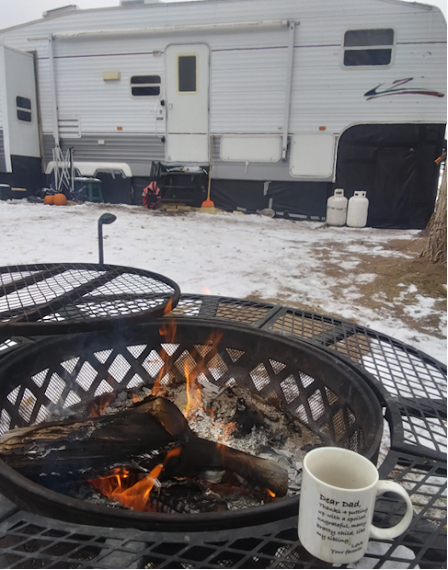
It is a balmy 27 [43] degrees today, but there is peace and serenity around the fire, I wish I had a friend or two here today to enjoy it with… Making the best of the situation… Merry Christmas to all.